Hindu Deities and Animals: Vahanas and Symbolic Associations
symbolisms are as diverse as they are profound.
Introduction
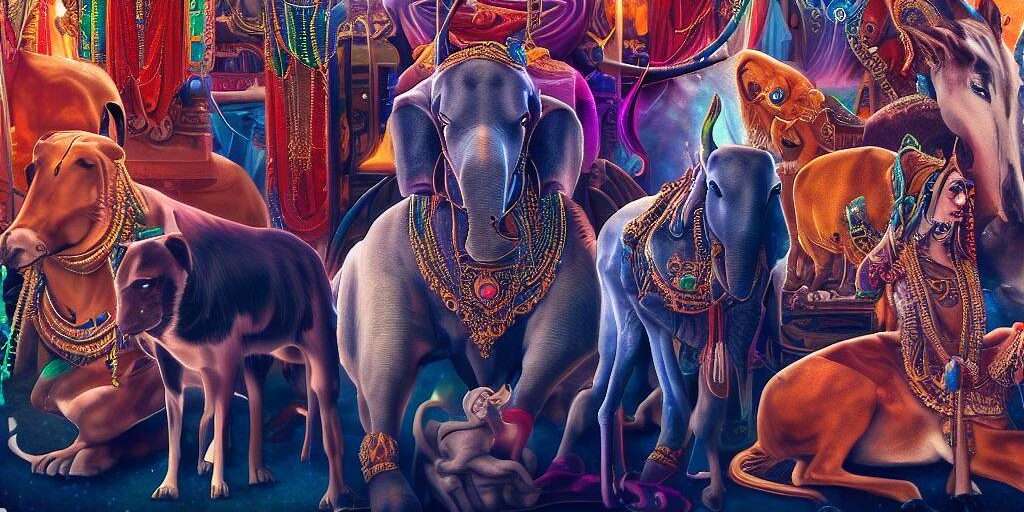
In the vast expanse of Hindu mythology, the stories and symbolisms are as diverse as they are profound. The rich tapestry of characters includes gods, goddesses, demigods, and a plethora of other mystical entities. The relationship between Hindu deities and their animal vehicles, known as vahanas, forms a crucial part of these stories. Their significance, often overlooked, delves into the heart of Hindu philosophy, shedding light on the human-animal symbiotic relationship, divinity, and cosmic order. In this article, we will explore the symbolic associations between Hindu deities and their animal vehicles.
Understanding Hindu Deities
In Hinduism, deities are beings of higher order, worshipped for their divinity and their attributes, representing various aspects of life and the universe. The Hindu pantheon is not a monolithic entity; instead, it is a complex network of deities, each having their unique stories, powers, and spheres of influence.
Hindu understandings of the divine vary across traditions. Deity iconography can include mounts, companions and other symbolic animals, and interpretations depend on the particular artwork and community.
Mounts and Other Animal Associations
A vahana is a deity's mount or vehicle. An animal shown alongside a deity is not automatically that deity's mount. This article distinguishes mounts from symbolic companions, animal forms and regional representations.
Vahanas, or animal vehicles, are more than just physical entities that the deities ride. They represent specific symbolic values connected to the deity they serve. The symbiotic relationship between a deity and their vahana often highlights the qualities of the deity and provides an intricate understanding of the deity’s role within the cosmic order. The attributes of these animals are symbolically tied to the deity, further enhancing the mythology and philosophical depth of Hinduism.
Deities, Their Mounts and Animal Symbolism
Now, let’s dive into exploring some deities and their vahanas, beginning our journey with the creator of the universe, Lord Brahma.
Lord Brahma and the Swan
Brahma, the creator among the Hindu trinity, is often depicted riding a hamsa (swan). The swan, known for its discriminative prowess to separate milk from water, represents Brahma’s wisdom and ability to discern good from evil, reality from unreality. This symbolic association also signifies Brahma’s role as the dispenser of spiritual knowledge, separating ignorance from enlightenment.
Goddess Saraswati and the Peacock
Saraswati, the goddess of knowledge, music, and arts, is associated with the peacock. A bird known for its beauty and majesty, the peacock symbolizes creativity, wisdom, and learning, paralleling Saraswati’s realm of influence. The peacock’s vibrant feathers reflect the various arts that Saraswati presides over, symbolizing the vibrancy and diversity of human creativity.
Lord Vishnu and Garuda
Vishnu, the preserver, is often depicted riding Garuda, a mighty eagle-like bird. As Vishnu is responsible for the maintenance of cosmic order, Garuda embodies attributes such as speed, strength, and martial skills. Furthermore, Garuda’s unwavering dedication to Vishnu mirrors the ideal devotee’s dedication to their chosen deity.
Gaja Lakshmi and the Elephants: An Iconographic Association
Lakshmi, the goddess of wealth, prosperity, and fortune, is often seen with elephants, specifically in an iconic scene where elephants are showering her with water. The elephant, a symbol of fertility and abundance in ancient India, complements Lakshmi’s dominion over wealth and prosperity.
Lord Shiva and Nandi
Shiva, the destroyer, is associated with Nandi, the bull. The bull, in its raw, uncontrolled state, represents animalistic tendencies and desires. However, Nandi, as Shiva’s vahana, is calm and disciplined, symbolizing how Shiva leads his devotees from ignorance and animalistic tendencies to wisdom, understanding, and enlightenment.
Goddess Durga and the Lion
Durga, the goddess of power, strength, and protection, is often depicted riding a lion. The lion, known as the king of beasts, symbolizes bravery, courage, and leadership. It signifies Durga’s fearless nature and her role as the protectress against evil and injustice.
Lord Ganesha and the Mouse
Ganesha, the god of beginnings and the remover of obstacles, is associated with the mouse. At first glance, the mouse seems an odd choice for the large deity, but it symbolizes desire, ego, and the unpredictable troubles that can create obstacles in life. Ganesha’s control over the mouse implies his dominion over these disruptive elements, reflecting his role in overcoming obstacles.
Goddess Kali and the Lion
Kali, the goddess of time, doomsday, and death, is associated with the lion, embodying raw power, courage, and aggression. The lion’s wild nature aligns with Kali’s fierce and fearsome aspects, highlighting her role as the destroyer of evil forces.
Lord Murugan and the Peacock
Murugan, the god of war, is associated with the peacock. The peacock, known for its beauty and pride, parallels Murugan’s association with beauty, youth, and valor. The peacock’s display of its vibrant feathers is akin to a warrior showcasing his bravery on the battlefield, mirroring Murugan’s martial attributes.
Hanuman's Vanara Form: Not a Separate Mount
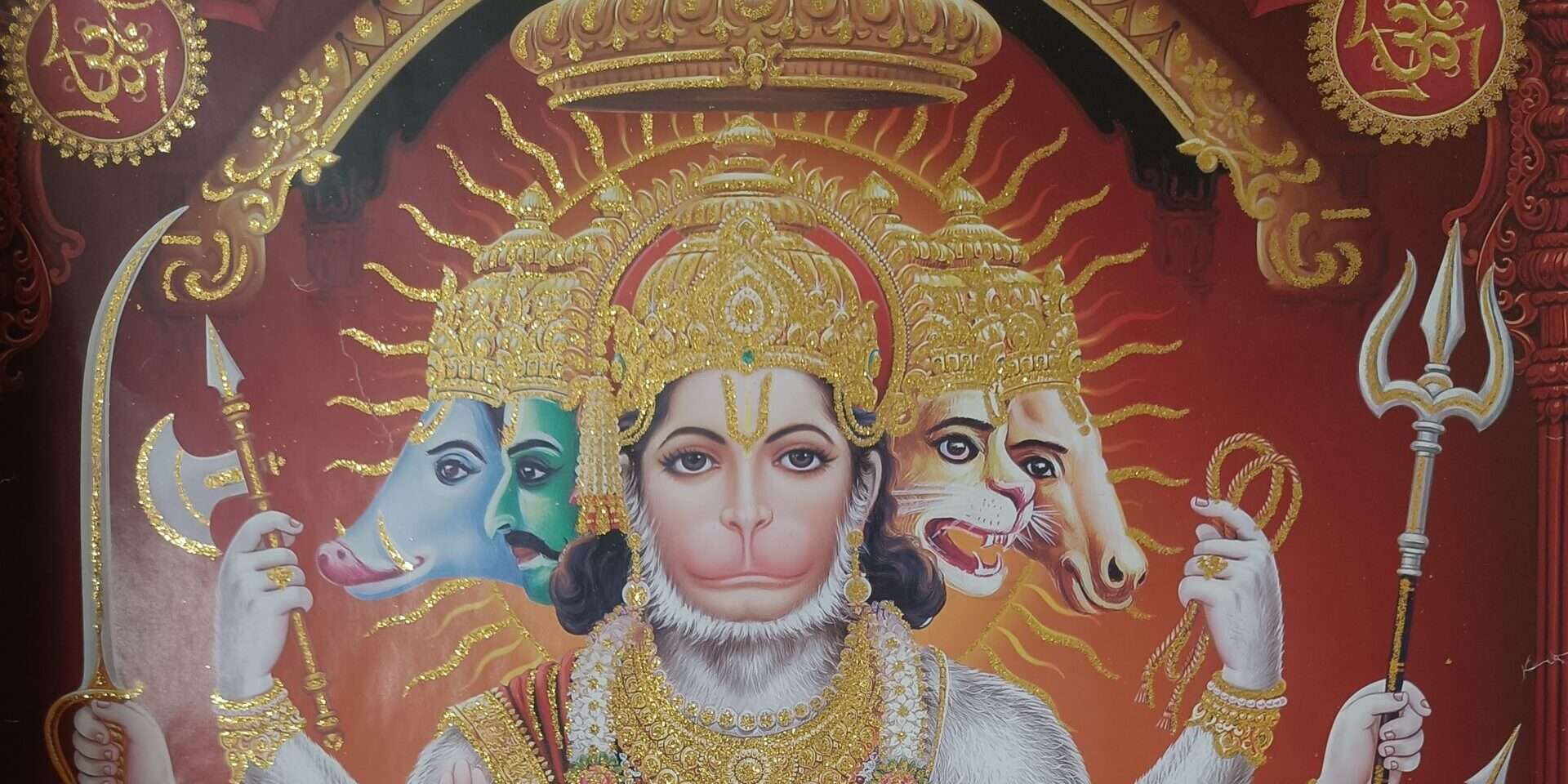
Hanuman, the monkey god, is a symbol of strength, loyalty, and unwavering devotion. This describes Hanuman's own vanara form rather than a separate monkey serving as his vahana. His form signifies strength, agility, and a playful yet devoted personality. His monkey form also emphasizes his deep connection with nature and his role as a bridge between humans and the natural world.
Lord Indra and the White Elephant
Indra, the king of heaven and god of lightning, thunder, and rain, is associated with the white elephant Airavata. Known for its purity and majestic presence, the white elephant complements Indra’s royalty and his dominion over the natural forces of the cosmos.
Goddess Parvati and the Lion
Parvati, the goddess of love, fertility, and devotion, is often depicted with a lion as her vahana. The lion, a symbol of power and determination, reflects Parvati’s strength as a mother and her protective nature. It also signifies the ferocity with which she defends her children and devotees.
Lord Yama and the Buffalo
Yama, the god of death, is associated with the buffalo. The buffalo, a symbol of death and darkness, aligns with Yama’s role as the taker of life. This association underscores the inevitability and impartiality of death, irrespective of one’s deeds in life.
Kubera and Yakshas: A Regional Representation
In a specific Angkor Wat relief, Kubera is shown on the shoulders of a yaksha. A yaksha is not an animal, and this regional depiction should not be presented as a universal animal mount. See the Angkor guide hosted by Cambodia's Ministry of Culture and Fine Arts.
Lord Agni and the Ram
Agni, the god of fire, is associated with the ram. In ancient times, the ram was often used in fire sacrifices, linking it with Agni. This connection reinforces the idea of transformation and purifying power inherent in the symbolism of fire.
Lord Varuna and the Makara
Varuna, the god of oceans, is associated with the makara, a sea-creature in Hindu mythology. The makara, often depicted as a hybrid aquatic creature, symbolizes the mystery and depth of the ocean, signifying Varuna’s dominion over the watery realms and the unconscious.
Lord Vayu and the Antelope
Vayu, the god of wind, is associated with the antelope. Known for its speed and agility, the antelope is a fitting symbol for the wind, highlighting Vayu’s swiftness and omnipresence. This association captures the essence of Vayu’s influence over the movement of life, breath, and natural forces.
Lord Kamadeva and the Parrot
Kamadeva, the god of love and desire, is associated with the parrot. The parrot, known for its enchanting voice and vibrant color, symbolizes beauty and romantic love. This association underlines Kamadeva’s role in human attraction and the propagation of life.
Lord Surya and the Seven Horses
Surya, the sun god, is depicted riding a chariot driven by seven horses. The seven horses represent the seven colors of sunlight and the seven days of the week. This association symbolizes Surya’s influence over time and his role as the illuminator of the world.
For a concrete example of the distinction, the Metropolitan Museum of Art describes Gaja Lakshmi being bathed by elephants; this is a different visual relationship from Vishnu riding Garuda.
Summary: Unveiling the Symbolism
In Hindu mythology, animal vehicles are not mere modes of transport for the deities but symbolize various philosophical aspects and teachings. They serve as a mirror to the qualities and powers of the deities they are associated with, providing a more profound understanding of the divine entity.
The symbiotic relationship between deities and their animal vehicles highlights the intrinsic connection between humans, animals, and the divine. It teaches us the importance of coexistence, mutual respect, and the interconnectedness of all forms of life.
Frequently Asked Questions (FAQs)
Why do Hindu deities have animal vehicles?
Hindu deities have animal vehicles to represent various philosophical teachings, symbolize specific aspects of the deities, and emphasize the interconnectedness of all forms of life.
How were the animal vehicles chosen for each deity?
The choice of an animal vehicle for a deity is not random but based on the attributes and symbolic meanings of the animal, which complement the deity’s nature and role in the universe.
Can deities have multiple animal vehicles?
Yes, deities can have multiple animal vehicles, especially in different regional traditions and stories within Hinduism. However, usually, one particular animal vehicle is most commonly associated with each deity.
What is the role of symbolism in Hindu mythology?
Symbolism plays a significant role in Hindu mythology. It serves as a medium to communicate complex philosophical ideas and teachings in a way that is easier to understand and relate to.
Are there any regional variations in the choice of animal vehicles?
Yes, there are regional variations in Hindu mythology, and these can extend to the choice of animal vehicles as well. Local cultural influences, traditions, and regional folklore often contribute to these variations.
Conclusion
Understanding the symbolism behind Hindu deities and their animal vehicles enriches our comprehension of Hindu mythology and its profound philosophical teachings. The journey through these narratives of gods, goddesses, and their faithful vahanas paints a vibrant picture of the Hindu cosmic worldview. It reveals an intricate tapestry where divinity, humanity, and the animal kingdom are interconnected, echoing the unity in diversity. With this, we encourage further exploration of Hindu mythology, an immersive experience that promises a deeper understanding of life, the universe, and oneself.
Further reading
Vahanas, the Vehicles of Hindu Gods and Goddesses: https://www.hinduwebsite.com/vehicles.asp